

Dull skin. Morning puffiness. Persistent dryness. Congestion that keeps returning. We tend to respond by changing our skincare. But in Chinese Medicine, we might also ask:
Do you bloat after eating? Do you get tired after meals? Are your stools frequently soft? Do you feel heavy, sluggish or cold?
If several sound familiar, your skin and digestion may be telling part of the same story. One place we look is the Spleen 脾 (Pi).
What does a “weak Spleen” mean?
Not necessarily a problem with your anatomical spleen. In Chinese Medicine, the Spleen describes a functional system involved in digestion, nourishment and the transformation and movement of food and fluids. One of its central functions is 運化 Yun Hua — transformation and transportation.
Put simply: Eating nutritious food is one thing. Turning it into nourishment your body can use is another. The Spleen is considered central to transforming what we eat into the foundations of Qi and Blood, while helping manage fluids — all of which can influence how well the tissues are nourished.
Traditionally, the Lung is paired with and governs the skin, particularly its surface functions including pores and perspiration, while also relating closely to respiration. The Spleen–skin connection is different: think nourishment, transformation and fluids.
What might Spleen weakness look like on your skin?
There's no single “Spleen face”. Look at your skin + digestion + body together.
a) DULL + TIRED: Skin looks flat, tired or lacks vitality alongside:
- Bloating after eating
- Post-meal tiredness
- Low energy
- Soft or loose stools
- Poor or inconsistent appetite
This resembles the classic Spleen Qi Deficiency picture.
b) PUFFY + HEAVY: Skin looks puffy, heavy or congested alongside:
- Bloating or fullness
- Heaviness in the body
- Sluggishness or brain fog
- Fluid retention
- Loose or sticky stools
Chinese Medicine may consider Spleen weakness with Dampness — where fluids aren't being transformed and moved effectively.
c) PALE + DRY: Skin looks pale, dry or undernourished alongside fatigue, weakness or sometimes dizziness. Here we may consider whether Blood and nourishment are also insufficient.
d) COLD + PUFFY: You feel cold easily, have cold hands or feet, loose stools, low energy and perhaps fluid retention. This may point towards the colder, more depleted pattern of Spleen Yang Deficiency.
The important part? “Weak Spleen” isn't one single condition — and different patterns need different support.
5 things you can actually do
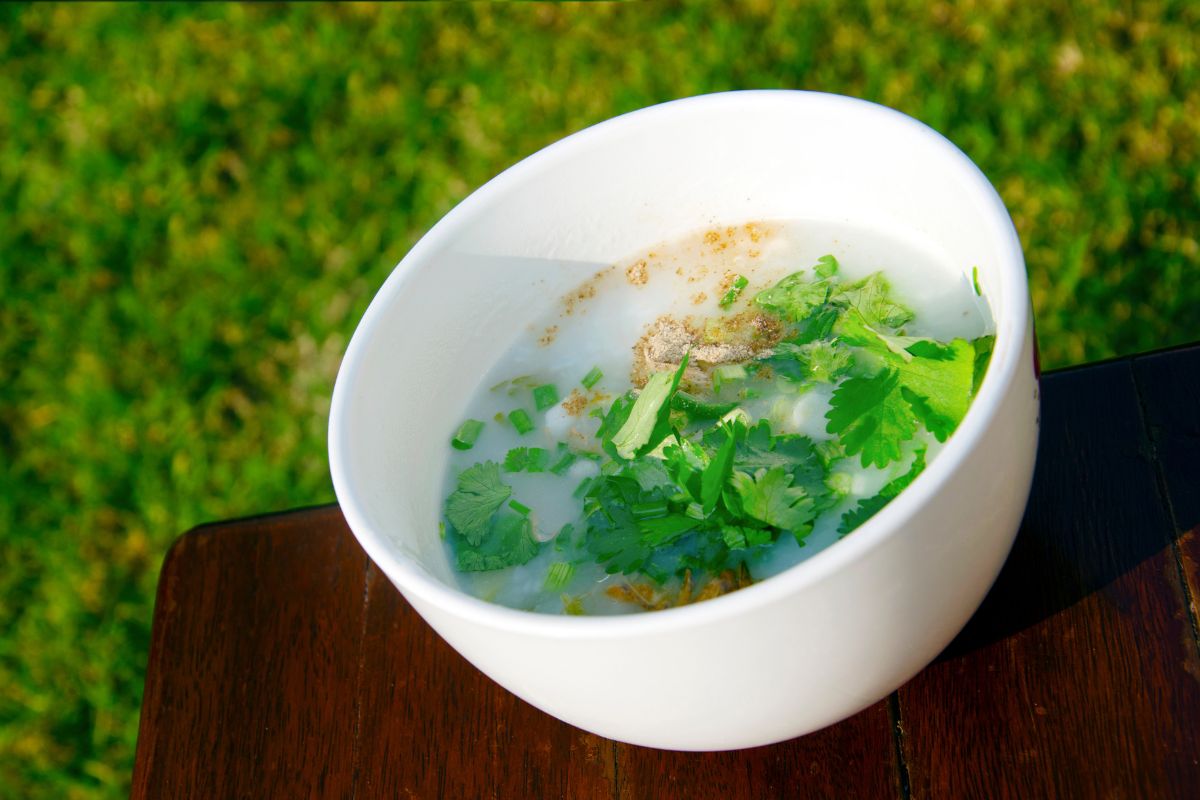
1. Try a warm breakfast: If you're bloated, tired and your digestion feels weak, experiment with replacing a cold breakfast with something cooked for a week. Try oat porridge, millet congee, rice congee with Chinese yam, or eggs with cooked vegetables. Then notice your bloating, bowel movements and energy before lunch.
2. Get to know 5 Spleen-friendly foods: Chinese yam 山藥 (Shan Yao) — traditionally used to support Spleen Qi and digestion. Add it to soup or congee.
Millet 小米 (Xiao Mi) — cook slowly into a soft, warm porridge.
Rice — simple, gentle and ideal for congee when digestion feels compromised.
Pumpkin or squash — naturally sweet, cooked foods easily incorporated into soups and meals.
Fresh ginger 生薑 (Sheng Jiang) — particularly useful traditionally when digestive weakness comes with coldness. A little is enough.
3. Puffy + heavy? Think differently: If you're puffy, bloated and heavy, simply eating more “nourishing” foods isn't necessarily the answer.
Chinese Medicine may consider Dampness. One traditional food to know is Yi Yi Ren 薏苡仁 (coix seed), used to support the Spleen while helping resolve Dampness. It can be cooked into soups and congee. This is why generic “Spleen strengthening” food lists don't work for everyone.
4. Make eating easier on your digestion: Before buying another supplement, look at how you eat.
Try to:
Eat at reasonably regular times.
Sit down to eat.
Chew properly.
Avoid making every meal something you squeeze between tasks.
If you constantly skip meals and then eat a huge dinner late at night, start there.
5. Track digestion and skin together
For one week, notice: Bloating • stools • appetite • energy after eating • puffiness • dryness/oiliness • complexion
Don't look at your skin in isolation. You may start noticing relationships between what's happening internally and what you're seeing externally.
Start tomorrow: Don't overhaul your entire diet. Have a warm breakfast. Make your next meal cooked and relatively simple. Eat it sitting down. Take a gentle walk afterwards. Then notice how you feel.
Externally, you want to support your skin with its targeted skincare and wellness solutions:
Disclaimer: This article discusses traditional Chinese Medicine concepts for educational purposes. References to the Spleen, Qi, Blood, Yang and Dampness describe TCM functional concepts and patterns rather than diseases of the anatomical spleen. Persistent or unexplained skin or digestive symptoms should be appropriately medically assessed.


